
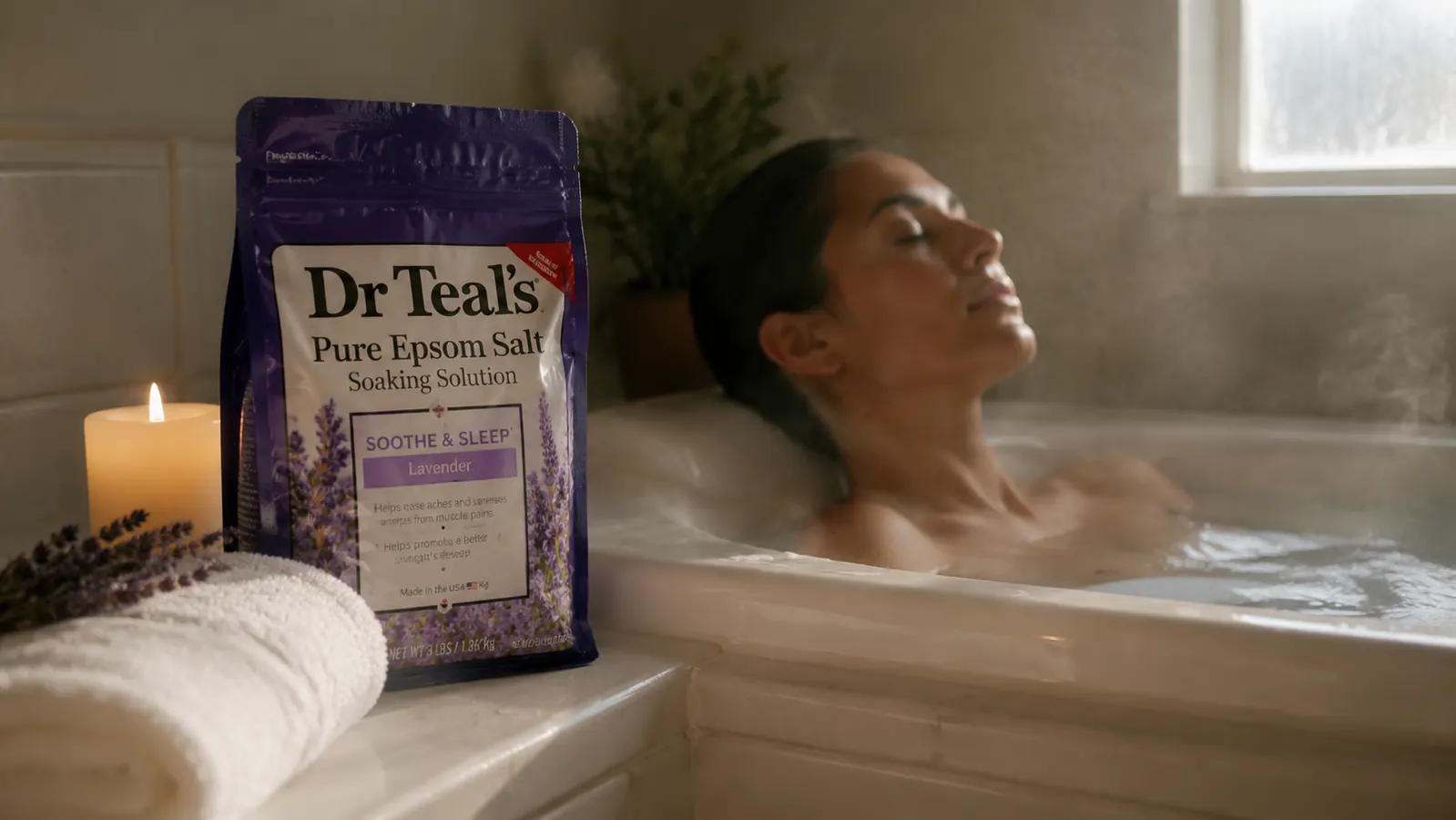
If you have spent any time around the wellness aisle lately, you have probably seen both epsom salt and magnesium flakes stacked next to each other with nearly identical promises on the label. Ease soreness. Relax tight muscles. Sleep better. The marketing sounds identical. The price tags are not. Magnesium flakes often run three to five times more per bath than a basic epsom salt soak. So before you spend the extra money, it is worth asking: do magnesium flakes actually do something different, or is the premium packaging doing most of the work?
The short answer is this: for most gym-goers, runners, and desk-bound lifters dealing with everyday muscle soreness, Dr Teal's Epsom Salt is the better buy. It is inexpensive, widely available, dissolves fast, and the lavender-scented soak genuinely supports the kind of wind-down that makes recovery feel like recovery. Magnesium flakes have their own strengths, but at four times the cost per session, they need to clear a much higher bar to justify the switch.
| Epsom Salt | Magnesium Flakes for Muscle Recovery | |
|---|---|---|
| Active Compound | Magnesium sulfate (MgSO4) | Magnesium chloride (MgCl2) |
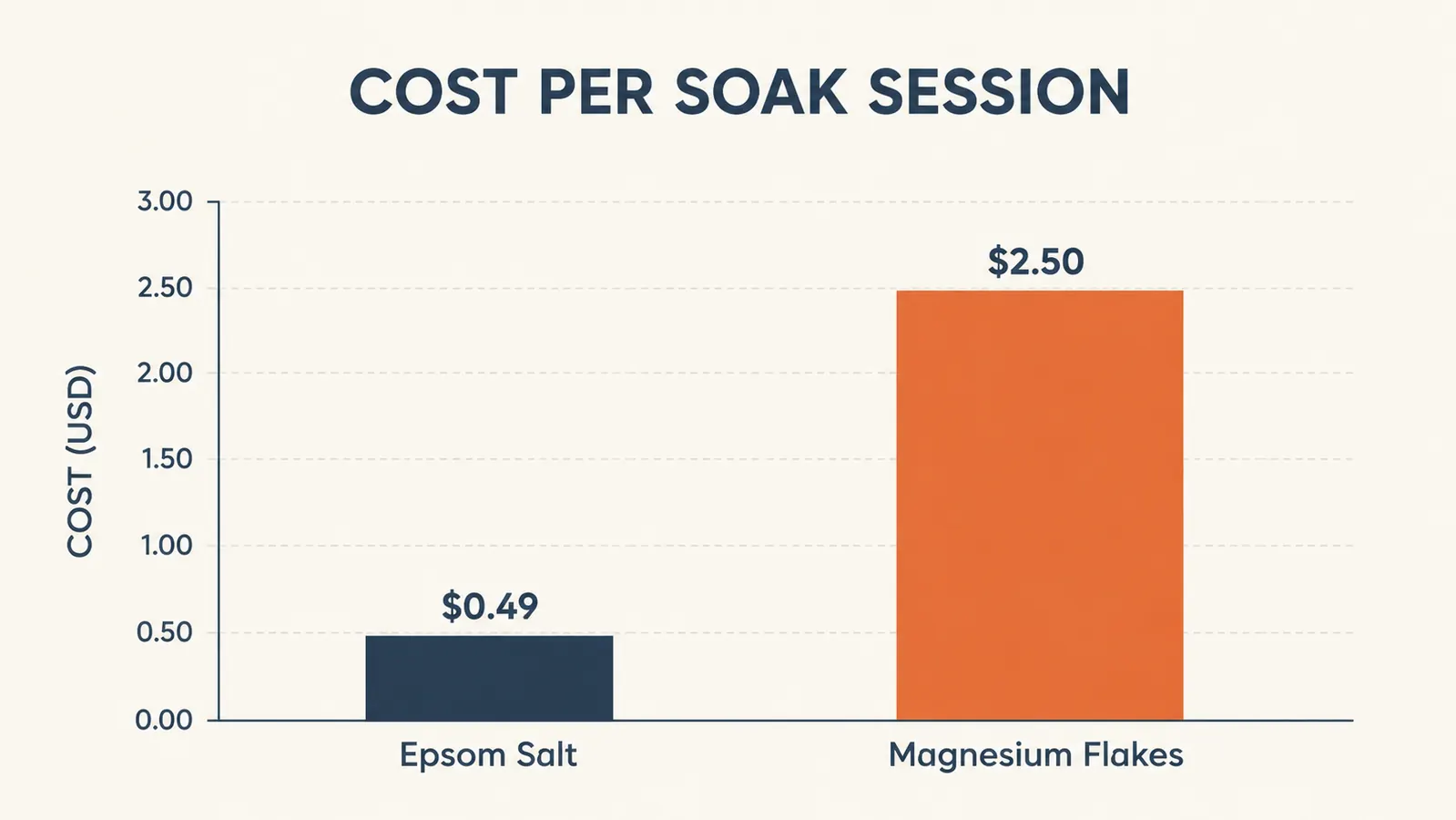
| Approx. Cost Per Soak | $0.49 (2 cups from a 3 lb bag) | $1.80 to $2.50 per recommended dose |
| Dissolve Time in Hot Water | Under 60 seconds | 1 to 3 minutes; thicker crystals |
| Scent / Aromatherapy | Lavender essential oil added; noticeable and pleasant | Usually unfragranced or faint mineral smell |
| Skin Feel After Soak | Neutral; rinse and done | Slightly silkier; some users report mild skin softening |
| Magnesium Bioavailability via Skin | Not established by peer-reviewed evidence | Not established by peer-reviewed evidence |
| Package Size Options | 3 lbs, 6 lbs, 8 lbs, easy to stockpile | Usually sold in smaller pouches; fewer bulk options |
| Shelf Life / Storage | Indefinite if kept dry; resealable bag | Absorbs humidity faster; can clump in storage |
| Widely Available Locally | Yes, drugstores, grocery stores, Target, Amazon | Mostly online or specialty health stores |
Where Dr Teal's Epsom Salt Wins
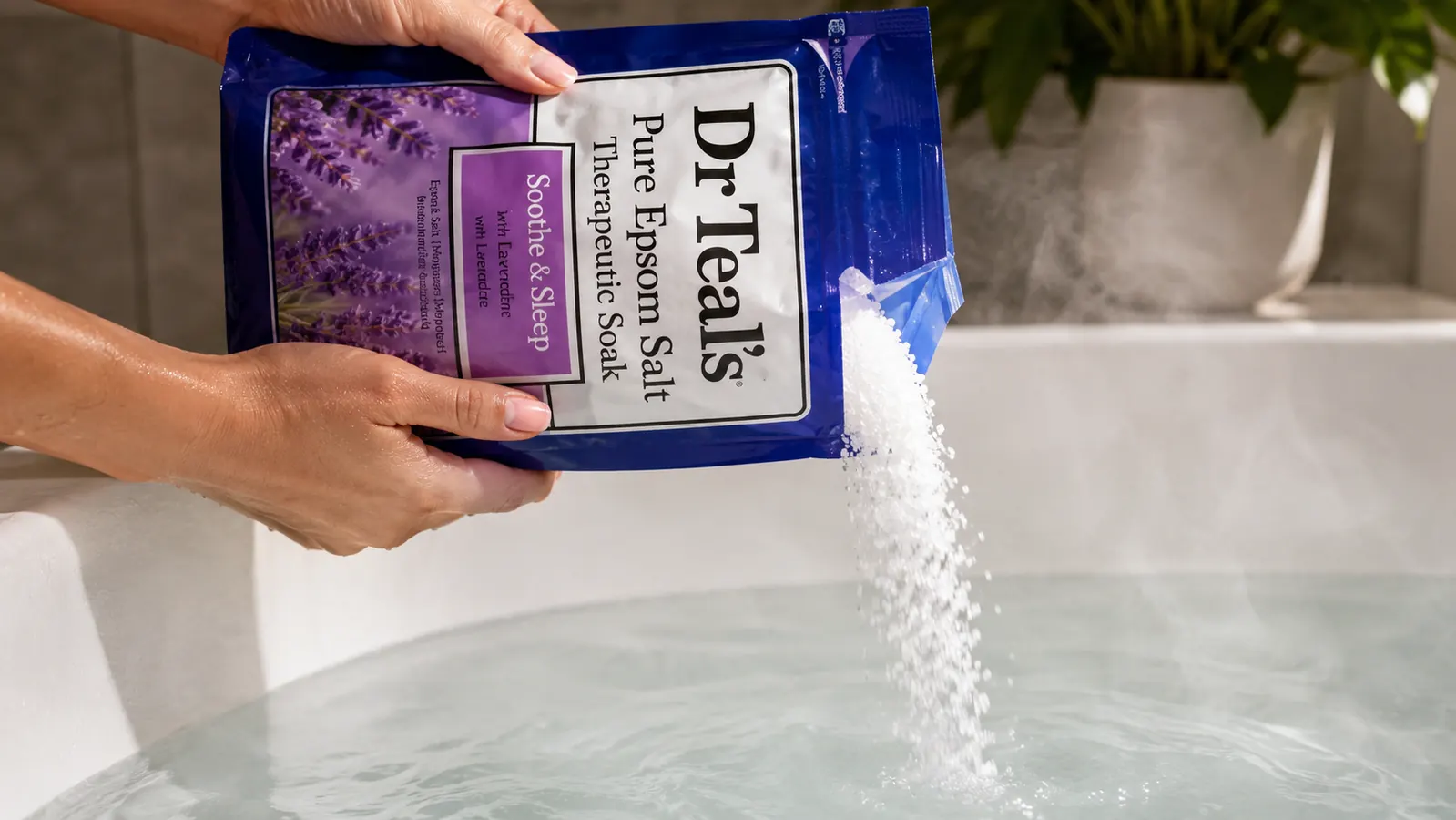
The cost-per-soak comparison is where Dr Teal's wins most convincingly. At roughly $5.87 for a 3-pound bag, you get 10 to 12 baths at the standard two-cup dose. That works out to under fifty cents a session. A quality magnesium flake product costs four to five dollars per equivalent soak. Over a month of regular post-workout baths, that gap adds up to thirty or forty dollars without any meaningful difference in how your muscles feel the next morning.
The lavender scent in the Dr Teal's Soothe and Sleep formula also earns its place. Recovery is not just about what happens to your muscles. It is about your nervous system downshifting before sleep. The lavender scent is genuine, not chemical-sweet, and it carries well in a hot bath. It signals your body that the hard work is done and rest is coming. That ritual effect is underrated, and it costs nothing extra when the scent is already baked into the product. With 18,484 reviews and a 4.8-star rating, this is not a product that survives on hype alone.
Where Magnesium Flakes Win
Magnesium flakes use magnesium chloride rather than magnesium sulfate. Some researchers argue that magnesium chloride is absorbed more efficiently through skin tissue, though the honest answer is that neither form has strong peer-reviewed evidence supporting significant transdermal absorption at bath concentrations. If you have a diagnosed magnesium deficiency and your doctor has discussed topical magnesium as a complement to dietary intake, flakes may be worth exploring under that specific guidance.
The skin feel is also slightly different. Some bathers notice their skin feels softer after a magnesium chloride soak, which can be a genuine perk for people with dry skin or those who soak frequently in hard water. If you are someone who runs long miles in dry climates and already deal with rough, irritated skin, the skin-conditioning difference is real enough to notice. That is about the extent of where magnesium flakes have a practical edge for a typical athlete on a normal recovery budget.
Your legs are sore. Your budget is limited. This is the bath you actually need.
Dr Teal's Epsom Salt Lavender Soothe and Sleep. 4.8 stars, 18,000+ reviews, under $6 for a 3-pound bag. Check the current price on Amazon and grab the bulk bag while it is in stock.
Amazon Check Today's Price on Amazon →Both salts work primarily because you are soaking in hot water for 15 to 20 minutes. That part is not marketing. The thermal effect on tight muscles is real. The rest is a matter of what you add to the water and how much you want to spend on it.
The Science Behind the Soak: What We Actually Know
Here is where I want to be straight with you, because there is a lot of loose language floating around recovery marketing. The idea that magnesium soaks meaningfully raise your serum magnesium levels has been disputed in the research literature. A 2017 study in Nutrients found only modest changes after foot soaks, and those results have not been replicated consistently. What we do know is that hot water immersion at 100 to 104 degrees Fahrenheit for 15 to 20 minutes measurably increases circulation, reduces perceived muscle tension, and supports parasympathetic nervous system activity, which helps you relax and sleep better.
The salt itself likely contributes to the osmotic experience, the way the water feels against your skin, and for some people, the ritual framing of a dedicated recovery practice. That is not nothing. Habits that you actually stick to outperform theoretically superior habits that you skip because they are too expensive or inconvenient. Dr Teal's wins on stickability. It is cheap enough to use every night, available everywhere, and the scent makes the experience feel like something you earned rather than a chore.

Who Should Buy Which
If you are a regular gym-goer, runner, or anyone dealing with standard post-workout soreness, start with Dr Teal's Epsom Salt. There is no meaningful evidence that spending four times more per soak delivers four times the recovery benefit. Use the money you save on something that has clearer evidence behind it, like quality sleep, adequate protein, or another recovery tool. Read the full long-term review of Dr Teal's for more detail on exactly how I use it and what I pair it with.
If you have sensitive or very dry skin, or if a healthcare provider has specifically recommended transdermal magnesium support for you, magnesium flakes are a reasonable thing to try. Start with a smaller bag before committing to a bulk purchase, because the skin-feel benefit is individual and not everyone notices a difference. Expect to pay more and do not expect dramatically faster recovery times versus a standard epsom salt soak. Also plan on storing them in an airtight container since they are much more prone to absorbing humidity and clumping than epsom salt crystals.
One more thing worth saying: neither epsom salt nor magnesium flakes replace the basics. If you are sleeping six hours a night, skipping protein, and going from brutal workout to brutal workout without a rest day, no soak is going to fix that. But as part of a consistent post-workout routine that includes hydration, a decent cool-down, and enough sleep, a 20-minute hot bath with Dr Teal's is one of the easiest and most affordable recovery habits you can build. Pair it with the step-by-step soak guide for the best results on leg day specifically.
The 4.8-star recovery soak that costs less than your post-workout protein bar.
Dr Teal's Epsom Salt Lavender, 3 lbs. Under $6. Over 18,000 reviews. Dissolves fast, smells great, and earns its place in a real recovery routine. See what it costs on Amazon today.
Amazon Check Today's Price on Amazon →