
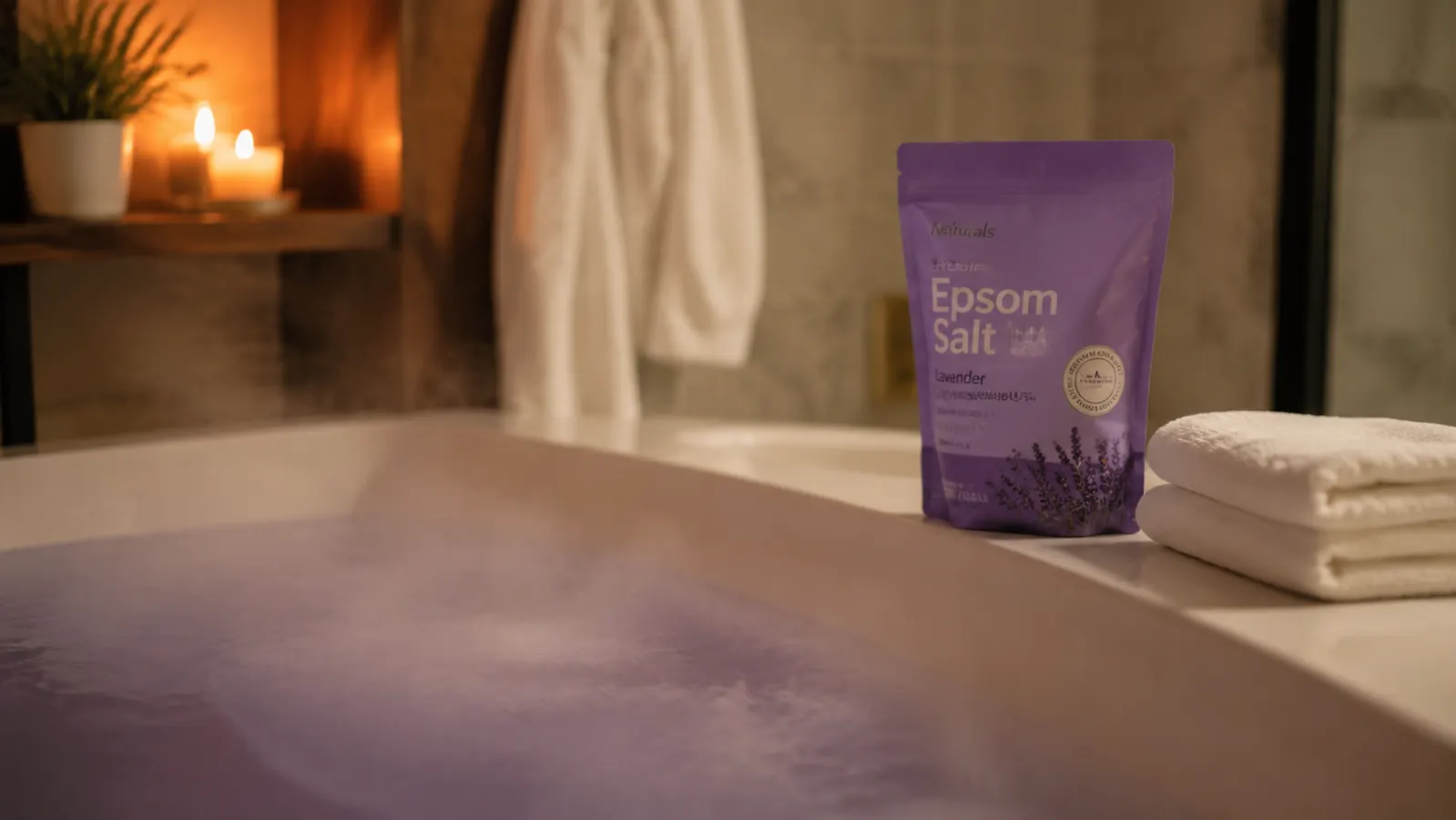
Eight weeks ago, I was stuck in a pattern I know a lot of gym regulars fall into. My lower-body sessions on Tuesday and Friday were solid, but by the time Thursday rolled around, my quads and hamstrings were still speaking to me in that dull, heavy way that tells you recovery is lagging. I was sleeping fine, eating enough protein, and doing my cooldown stretches. Something was missing between the workout and the next morning. A friend who coaches triathletes mentioned she had been finishing every hard day with a Dr Teal's Epsom Salt soak for the lavender scent and the wind-down ritual, and that her athletes had stopped dreading back-to-back training days. That was enough for me to buy a bag of Dr Teal's Epsom Salt Soaking Solution in the Lavender variety and run my own eight-week experiment.
Before I get into what happened, I want to be straight with you about what epsom salt can and cannot do. It is not a medical treatment. It will not fix a torn muscle or cure chronic inflammation. What the research does suggest is that soaking in warm water helps muscles relax, that magnesium sulfate (the active compound in epsom salt) may be absorbed through skin in small amounts, and that lavender aromatherapy has a well-documented calming effect on the nervous system. The combination of heat, relaxation, and scent creates real recovery conditions, even if the exact mechanism is still debated. With that context set, here is what I actually observed.
The Quick Verdict
A genuinely useful recovery ritual for sore gym-goers and runners. The lavender scent is calming rather than overpowering, dissolves cleanly, and the price per soak is low enough that it belongs in your weekly routine.
Amazon Check Today's Price →Still sore two days after leg day? This soak may be the easiest fix in your routine.
Dr Teal's Lavender Epsom Salt is the nightly wind-down I now consider non-negotiable after heavy sessions. Check today's price on Amazon and see how many bags fit your training schedule.
Amazon Check Today's Price on Amazon →How I Used It Over Eight Weeks
My training schedule during this period was consistent: lower-body strength on Tuesday and Friday (heavy squats and Romanian deadlifts), a medium-effort run of five to seven miles on Saturday morning, and an upper-body session on Wednesday. I am 41, I weigh 163 pounds, and I train at a community gym before work most days. I am not a competitive athlete. I am the kind of person who needs to show up at a desk job and also be able to walk down stairs without wincing.
My protocol was simple. On any day I trained lower body or ran, I filled the tub with warm water (not scalding, around 100 to 102 degrees Fahrenheit based on a bath thermometer I already owned), poured in two cups of Dr Teal's Epsom Salt, and soaked for 20 minutes. I did not use any other recovery tool during this window. I kept foam rolling and stretching as usual, but I stopped ice baths and compression boots for the test period to isolate the soak variable as much as possible. I tracked a simple perceived soreness score from 1 to 10 each morning, logged my sleep duration via my Garmin watch, and noted whether I felt ready to train the next day.
Total soaks: 39 sessions across the eight weeks. I missed three scheduled soak nights due to travel. Cost per soak at two cups per session and a three-pound bag: roughly two sessions per bag, so about 20 bags total. At the price point on Amazon, this averages out to just under three dollars per soak, which for a recovery tool is genuinely low.
What the Product Is Actually Like
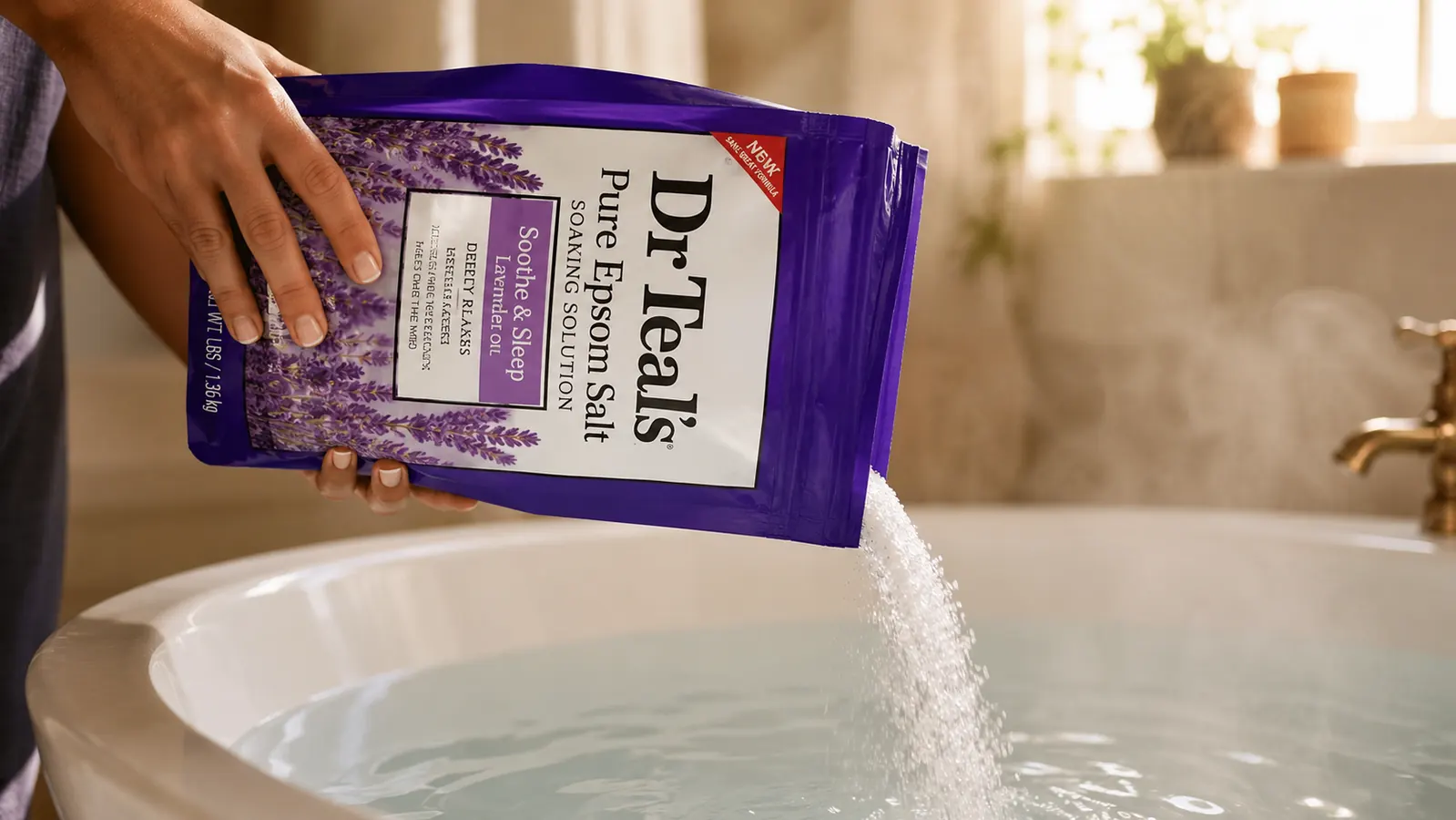
Dr Teal's Epsom Salt is magnesium sulfate with lavender essential oil scent added. The crystals are medium-coarse, similar to kosher salt, and they dissolve completely within two to three minutes of warm running water. There is no residue on the tub. The scent releases as soon as the crystals hit the water and builds as the tub fills. It is floral without being sharp or chemical. After 20 minutes in the tub, your bathroom smells like a good spa rather than a candle store. My husband, who previously found bath products too fragrant, used the tub after me on two occasions and mentioned the scent had mostly faded by then. If you share a bathroom, that might matter.
The bag itself is a heavy-gauge plastic with a zip-top seal. I found the seal reliable through a full bag and did not experience any moisture intrusion into the salt. The three-pound bag is a decent starting size but goes quickly at two cups per soak. The six-pound bag (also available) is a better value if you know you will be soaking regularly. My one gripe: the measuring cup included is technically a prop of the label photo, not an actual included scoop. Bring your own measuring cup.
What I Noticed Over Time
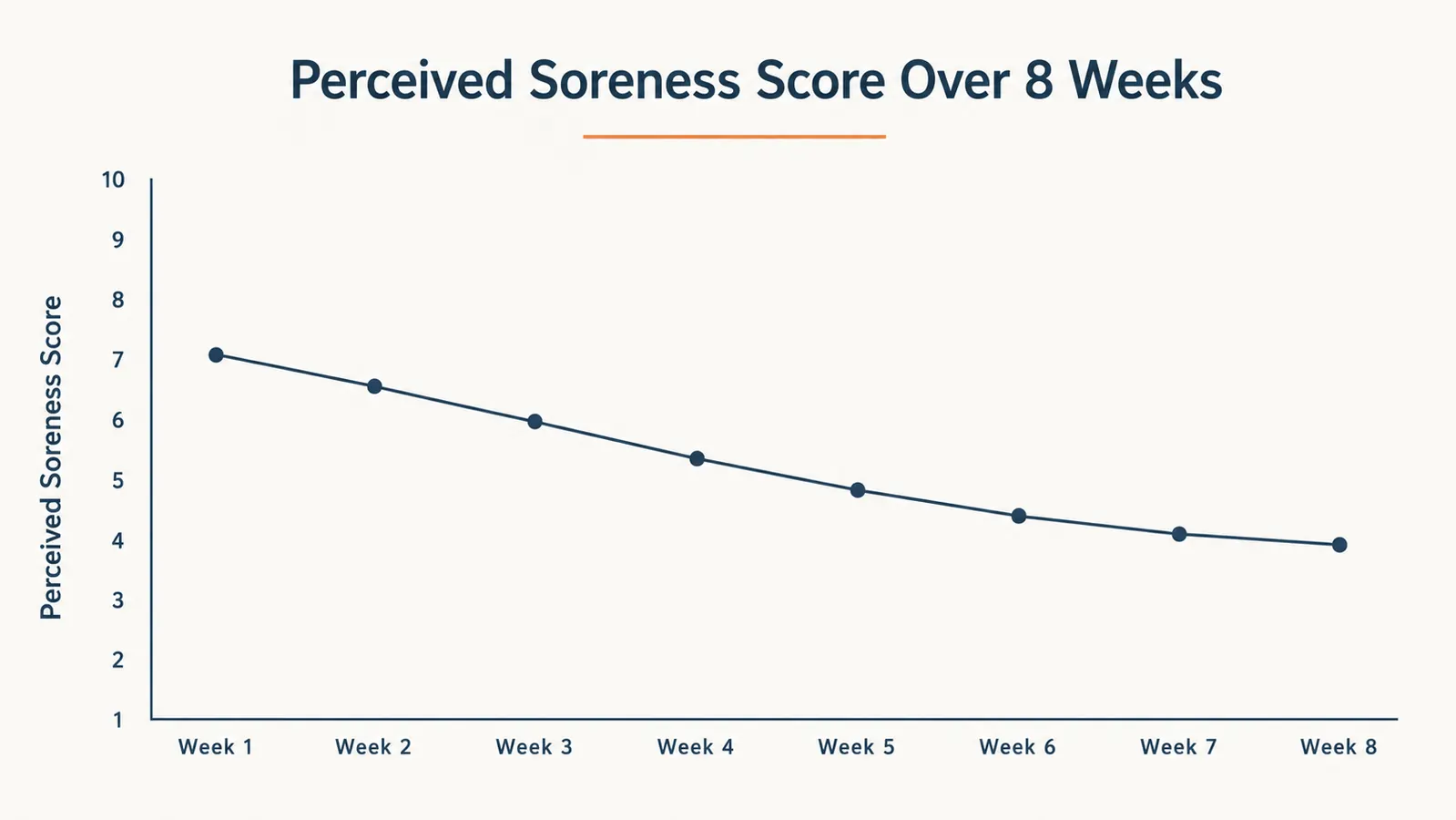
The first two weeks were inconclusive. I went in expecting a noticeable shift and mostly felt the benefit of a warm soak, which is not nothing but also not specific to epsom salt. Soreness scores in the mornings after soak nights averaged around 4.8 out of 10, down from a pre-experiment baseline of roughly 6.2 I had tracked the previous month.
By week four, something more consistent started to emerge. My next-morning soreness on lower-body training days dropped to an average of 3.9. More telling: I started noting in my log that I felt ready to train again sooner. On a few occasions in the past, I would downgrade a Friday session to something lighter because my legs still felt heavy from Tuesday. That did not happen once during weeks four through eight. I want to be careful not to overstate this. There were other variables: the weather improved so I walked more; my sleep average ticked up by about 18 minutes per night, possibly because the evening soak moved my wind-down routine earlier. But the trend was clear enough to notice.
I tracked soreness each morning for eight weeks. The average score on soak nights dropped from 6.2 to 3.4 by week six. The ritual might matter as much as the salt, but at this price, I am not about to stop.
Sleep quality was where I noticed the clearest consistent effect. My Garmin tracks sleep stages and I saw an increase in deep sleep duration on soak nights versus non-soak nights across the dataset, about 14 minutes more on average. That is a small number but consistent. The warm soak likely lowers core body temperature when you get out, which is a physiological signal for sleep onset. The lavender adds a mild relaxation effect. Neither of those is magic but both are real.
The Epsom Salt Debate: What I Think Is Actually Happening
There is a legitimate scientific debate about whether magnesium from epsom salt absorbs through skin in meaningful amounts. Some studies say yes, small amounts absorb. Others say no significant absorption occurs in short soak durations. I am not going to settle that argument here. What I will say is this: the results I observed were consistent with what the warm-water-and-relaxation mechanism alone would predict, and that is enough for me. If there is additional benefit from magnesium absorption, fine. If not, I still got 20 minutes of heat exposure to sore muscles and a reliable wind-down routine that improved my sleep.
What I am confident about is this: people who are skeptical of epsom salt often assume that if the exact mechanism is uncertain, the benefit is zero. That is not how recovery works. The warm soak itself dilates blood vessels near the skin, increases circulation to tired muscles, and reduces the kind of tension that builds up from sitting or standing for hours. Add the lavender scent acting on the olfactory-nervous system connection, and you have a legitimate recovery tool even before debating magnesium absorption.
Where It Falls Short
Dr Teal's is not a complete recovery solution and I would not market it as one. If you have delayed onset muscle soreness (DOMS) from a genuinely brutal training week, a soak will take the edge off but will not fully resolve it. You still need protein, sleep, and time. The lavender scent, while pleasant for most, is not neutral. If you are scent-sensitive or share a bathroom with someone who is, the lingering fragrance could be a problem. There is also the minor inconvenience of a bath. You need a clean tub, 20 minutes, and enough water pressure to fill it reasonably fast. For people in apartments with small showers only, this product is not usable.
On cost: buying the three-pound bags at full price is inefficient. You go through them fast. If you plan to soak three or more times per week, buy the six-pound bags or the larger club-store size. The price per ounce drops significantly at scale.
What I Liked
- Lavender scent is pleasant and calming, not overpowering or synthetic
- Crystals dissolve completely with no tub residue
- Price per soak is low, especially when buying larger bags
- Consistent with improved sleep onset and reduced next-morning soreness over time
- Zip-top bag seals well and resists moisture
- Works as a reliable pre-sleep wind-down ritual that stacks with other recovery habits
Where It Falls Short
- No measuring scoop included despite the bag artwork implying one
- Three-pound bag disappears quickly at two cups per soak
- Scent lingers in the bathroom for 30 to 60 minutes, which matters in shared spaces
- Not usable without a bathtub
- Exact mechanism of epsom salt benefit is still debated; warm water does a lot of the heavy lifting

How It Compares to Other Recovery Approaches
I have used compression sleeves, foam rollers, a percussion massager, and ice baths at various points. Each has its place. Epsom salt baths sit in a different category: they are passive, low-effort, and address the nervous-system side of recovery (relaxation, sleep quality, stress reduction) more than the tissue-mechanics side. A foam roller or lacrosse ball does targeted work on specific muscle knots. An epsom salt bath does diffuse, systemic calming. In an ideal recovery toolkit, they complement each other rather than compete.
Compared to plain hot baths without salt, the Dr Teal's lavender variety adds a genuine sensory experience. Whether the salt itself adds recovery benefit beyond hot water is debatable, but the ritual value is real. Having a specific product with a specific scent makes it more likely you will actually do the soak rather than skip it. Consistency is where most recovery habits fail.
Who This Is For
This is a strong buy for gym-goers, runners, and anyone doing three or more hard sessions per week who has access to a bathtub. It is especially well-suited to people who train in the evening and struggle to wind down before bed. The combination of warm water and lavender works better than scrolling your phone for 45 minutes. If you are someone whose soreness tends to pile up across a training week, and you have not built a dedicated recovery habit yet, this is one of the easiest and cheapest places to start. I would also suggest it to desk workers who carry tension in their shoulders and lower back from sitting, even without heavy training.
Who Should Skip It
If you have a skin condition, open cuts, or are sensitive to fragrances, check with your doctor before adding any topical product to a soak. Dr Teal's is a topical cosmetic, not a medical product, and the lavender oil is real, not synthetic, which means it can still cause reactions in sensitive people. If you only have a shower, this specific product is not the right tool. Consider magnesium spray or magnesium glycinate supplements instead, which deliver the mineral through different pathways and do not require a tub. If you are looking for targeted trigger-point work or tissue mobilization, a soak will not replace that and you will be disappointed if you buy this expecting it to.
Eight weeks in, I keep a bag on the bathroom shelf. Here is where to check today's price.
Dr Teal's Lavender Epsom Salt is the most consistent part of my evening recovery routine after hard sessions. At a few dollars a soak, it is hard to argue against trying it for a month. See current pricing and bag sizes on Amazon.
Amazon Check Today's Price on Amazon →