
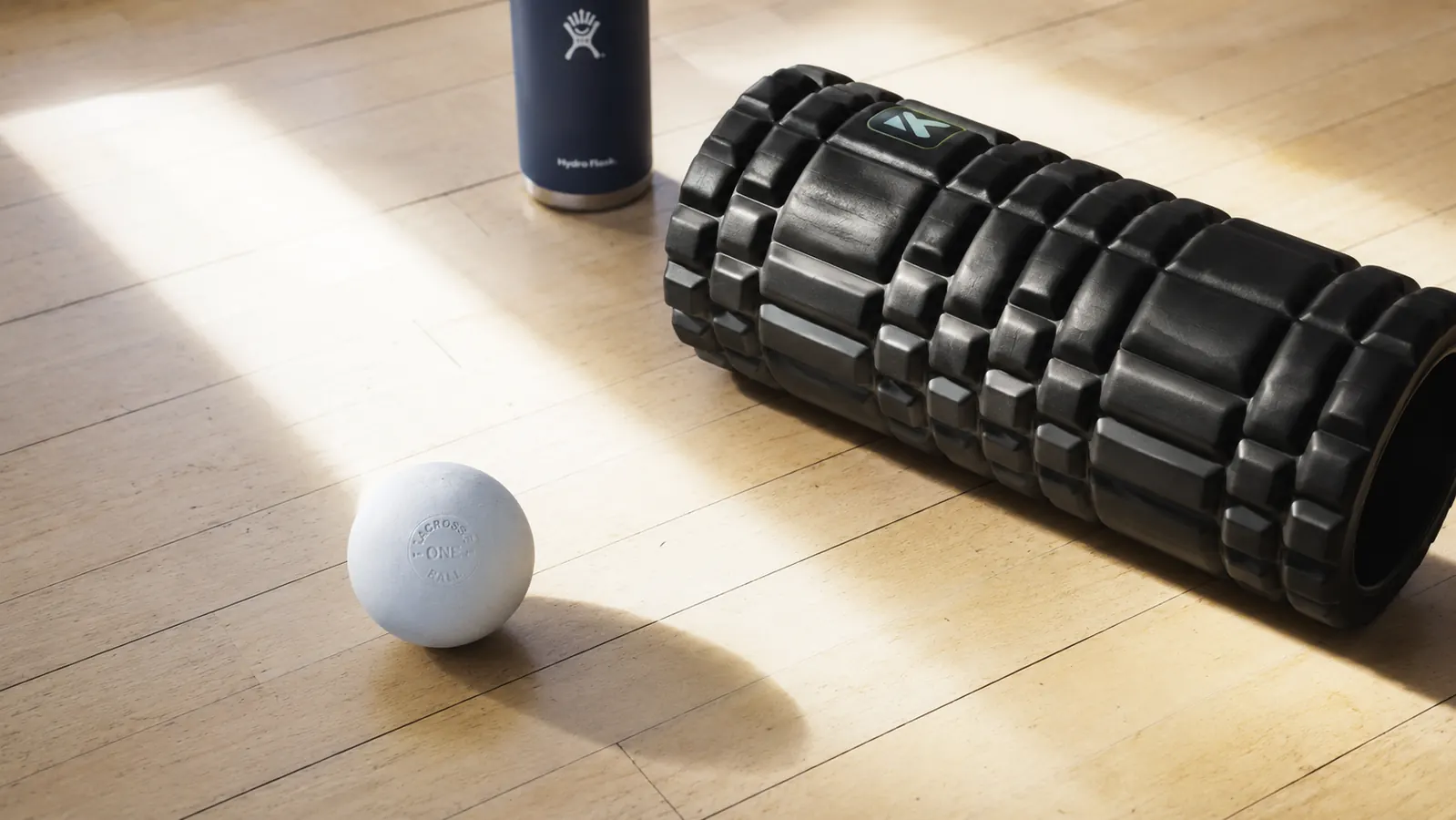
If you have a stubborn knot between your shoulder blade and spine that just will not quit, you have probably tried both a foam roller and a lacrosse ball at some point. Maybe the foam roller helped a little. Maybe the lacrosse ball felt like someone was drilling into you with a thumb. Or maybe you rolled around on the floor for five minutes, felt nothing, and gave up. The tools are not the problem. The mismatch is.
Lacrosse balls and foam rollers both fall under the broad label of self-myofascial release, but they work through completely different mechanisms. One is a precision instrument. The other is a broad-area flushing tool. Knowing which to reach for, and when, changes everything about how fast you recover. I am going to lay out exactly where each one wins, where each one falls short, and who should probably own both. For this comparison I am using a standard Kieba lacrosse ball, the firm, dense kind most lifters and runners keep in their gym bag, against a typical foam roller.
| Lacrosse Ball | Foam Roller for Trigger Point Relief | |
|---|---|---|
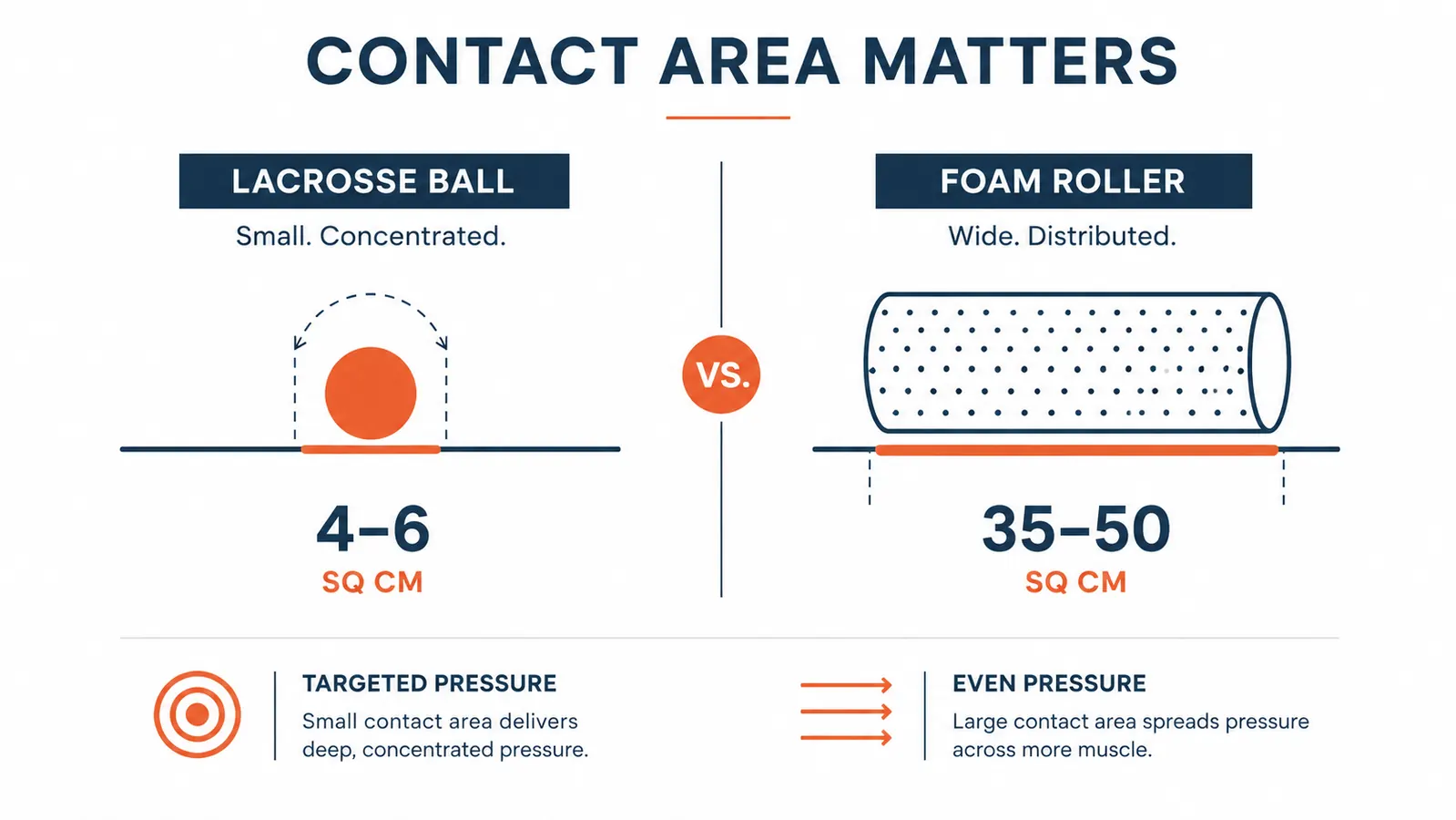
| Contact Area | Small and concentrated (4-6 sq cm), targets a single trigger point | Wide and distributed (35-50 sq cm), spreads pressure across a muscle group |
| Best Use Case | Pinpoint knot release: upper traps, glutes, pecs, plantar fascia, hip rotators | General muscle flushing: quads, hamstrings, IT band, thoracic spine, calves |
| Pressure Control | High control: lean more for more pressure, ease off for less, one spot at a time | Moderate control: bodyweight drives pressure, harder to isolate one exact spot |
| Portability | Fits in a gym bag side pocket, under 0.5 lbs, no cleaning required | Bulky, typically 12-18 inches long, awkward for travel or small bags |
| Durability | Solid rubber, will not deform or compress over time; Kieba rated for heavy daily use | Foam density degrades over months with heavy use; cheap rollers flatten faster |
| Learning Curve | Steeper: you need to find the right spot and tolerate concentrated pressure | Gentler: easier to get started, less pinpoint discomfort, good for beginners |
| Price Range | Under $10 for a quality ball like the Kieba | $15-$40 depending on density and brand; vibrating rollers run $60+ |
Where the Kieba Lacrosse Ball Wins
The lacrosse ball wins anywhere you need to park pressure on a single point and hold it. That is the core mechanic of trigger point release. You find the knot, sink into it with sustained pressure for 30 to 90 seconds, and wait for the tissue to respond. A foam roller cannot do that. The surface area is too wide, and when you are rolling around looking for the spot, you pass over it too quickly to get any sustained pressure going.
The Kieba ball is particularly effective on the upper trapezius, the suboccipitals at the base of the skull, the piriformis deep in the glute, the pectoralis minor, and the arch of the foot for anyone dealing with plantar fasciitis. These are all spots where the muscle or fascia runs close to a bony surface, which makes it easy to compress the tissue between the ball and the wall or floor. Foam rollers cannot get into most of these areas at all. The glute is a good example: rolling your glute on a foam roller mostly just compresses a large slab of muscle tissue without hitting the deeper piriformis where the real knots tend to live. Sit on a lacrosse ball, shift your weight toward the outside hip, and you will feel the difference in about four seconds.
The other practical advantage is portability. The Kieba fits in a coat pocket. It costs less than a decent cup of coffee. There is nothing to inflate, nothing to wipe down, nothing to charge. If you travel for work or train at a commercial gym with limited floor space, a lacrosse ball is the recovery tool that actually shows up consistently because it asks almost nothing of you. Consistency matters more than perfection in recovery, and the Kieba lacrosse ball makes consistency the easy choice.
Your upper traps and glutes have been waiting for a real trigger point tool.
The Kieba lacrosse ball has over 24,000 reviews and a 4.7-star rating. At current price, it costs less than a single foam roller session at a recovery studio.
Amazon Check Today's Price on Amazon →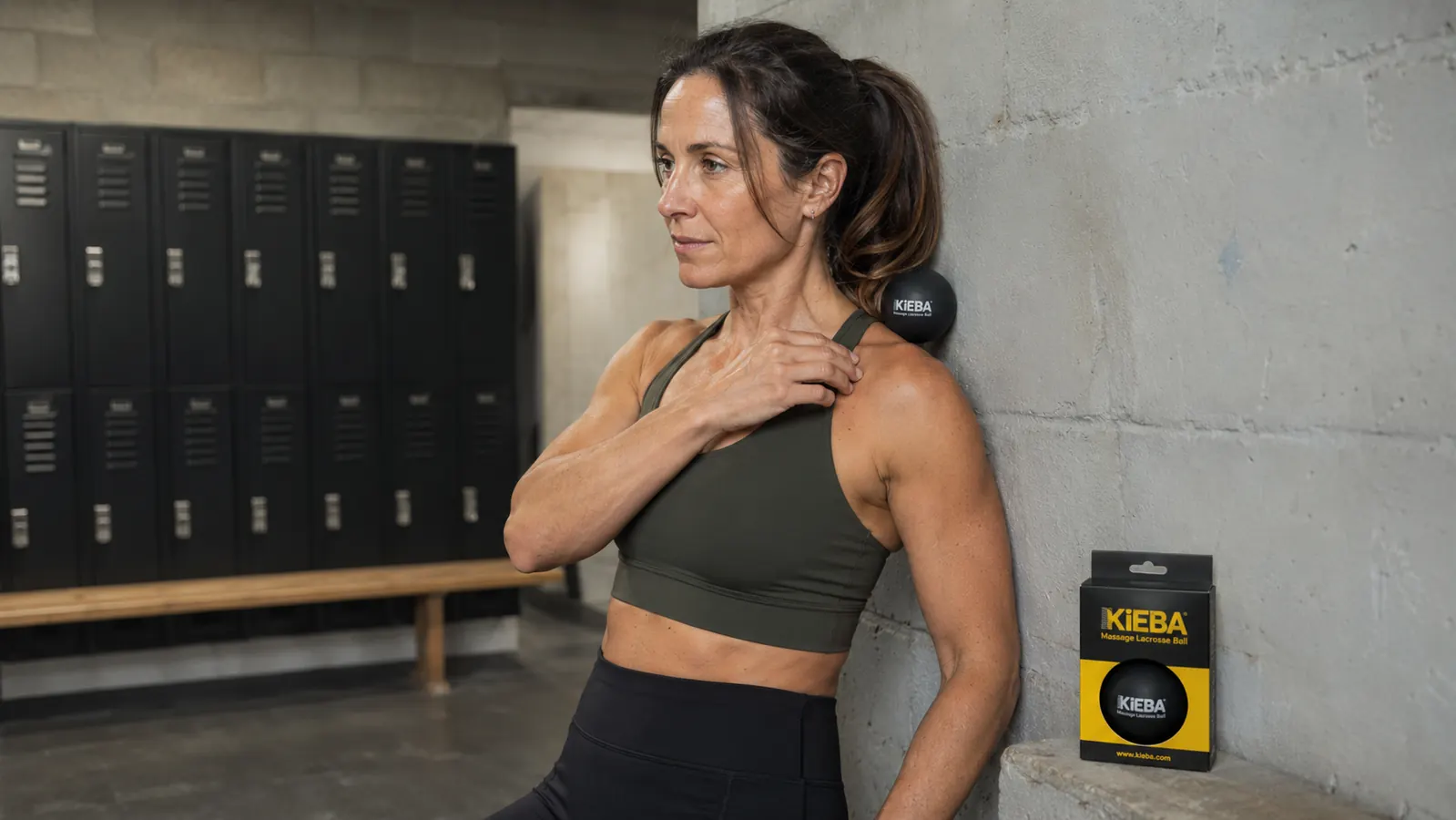
Where the Foam Roller Wins
The foam roller earns its place in any recovery routine for large muscle group flushing. After a long run or a heavy squat day, your quads, hamstrings, and calves can feel congested and tight along their full length, not just at one knot. Rolling slowly down the length of the quad from hip to knee, pausing where you feel resistance, and then continuing is genuinely effective for this kind of broad tissue work. It also increases circulation to the area and can help restore range of motion before a workout as part of a dynamic warm-up routine. The foam roller is a better choice here because you need coverage, not precision.
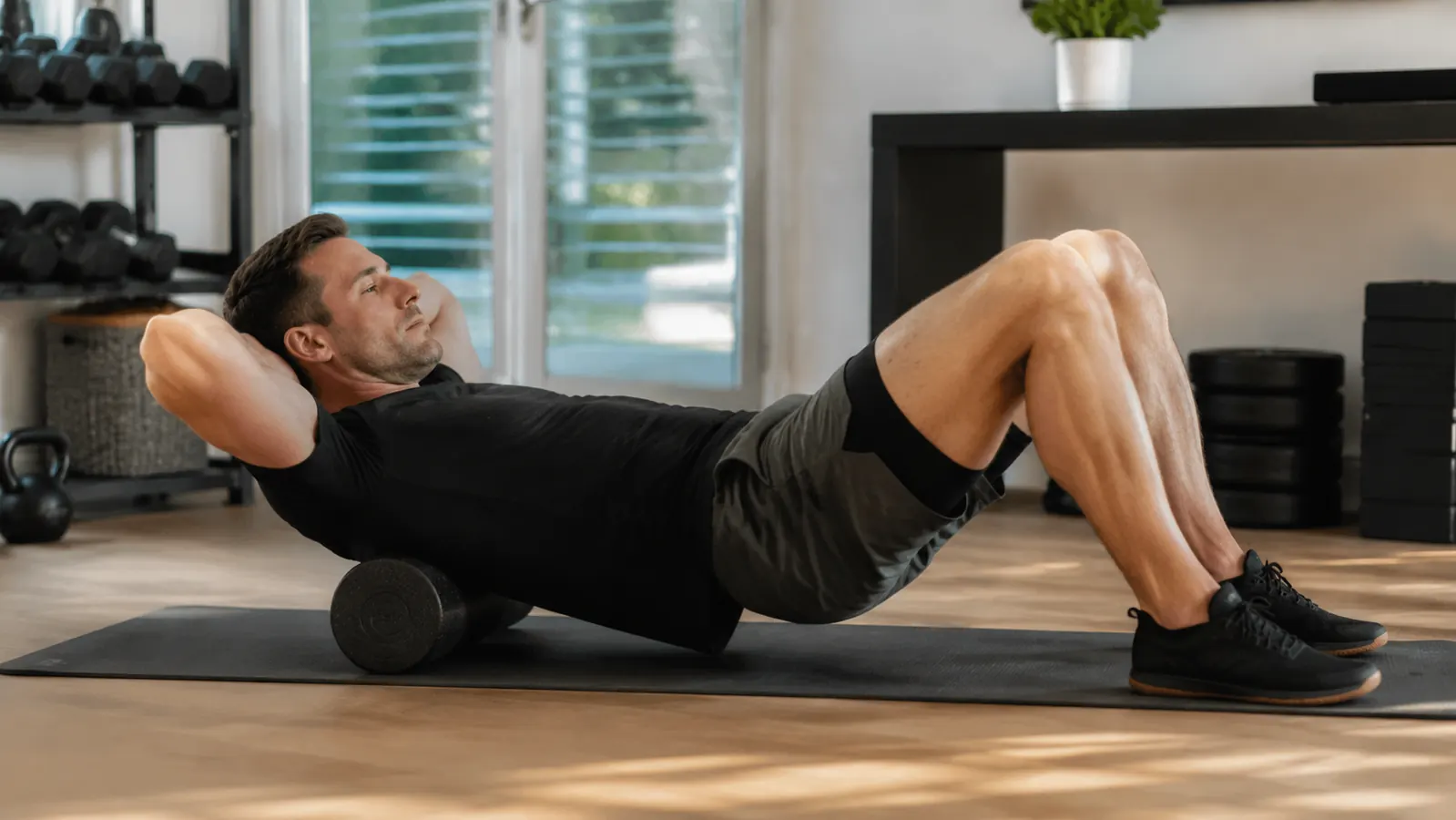
The thoracic spine is another area where the foam roller is clearly better. Lying back over a foam roller and extending over it segment by segment loosens the mid-back in a way a lacrosse ball simply cannot replicate. If you spend long hours sitting at a desk or driving, that extension over the roller helps restore the natural curve of your thoracic spine and takes compression off the joints. This is also one of the gentler applications, which makes the foam roller a solid entry point for beginners or anyone coming back from injury who needs to ease into soft tissue work.
The foam roller is a push broom. The lacrosse ball is a scalpel. Most people need both, but they need to know when to put down the broom and pick up the blade.
The Science Behind the Difference
Both tools work through mechanical compression of soft tissue, which can temporarily reduce muscle tone, improve local circulation, and modulate pain signals through mechanoreceptor stimulation. The current research suggests that sustained pressure at a specific point, the method a lacrosse ball enables, is more likely to produce a lasting reduction in a localized knot than brief rolling across a broad area. A 2018 review in the Journal of Bodywork and Movement Therapies found that sustained compression techniques showed more consistent short-term improvements in trigger point sensitivity than dynamic rolling, though both groups showed some benefit. Neither tool replaces professional treatment for persistent or severe pain, and neither is a substitute for medical evaluation if something does not feel right. These are wellness recovery tools, not treatment devices.
What this means in practice: if you have a specific, palpable knot that you can feel with your fingertip, a lacrosse ball is almost certainly the faster path to relief. If you are dealing with generalized post-workout tightness across a large muscle, the foam roller is the better starting tool. Many coaches, including me, recommend doing foam roller work first to warm the tissue and increase blood flow, then following up with targeted lacrosse ball work on any specific knots you find. The two tools complement each other in sequence rather than competing.
Who Should Buy Which
If you are choosing between the two and can only buy one right now, your decision comes down to what kind of discomfort you carry. If you have specific spots that bother you repeatedly, the upper trap near your neck, a hip flexor attachment, the outside of your hip, the arch of your foot, buy the lacrosse ball first. The Kieba is the one I would point you to because the rubber density holds up to daily use without flattening, and the surface texture provides just enough grip to keep it from skating away when you lean into it on a wall. At current price it is genuinely low-risk to try.
If you are a runner or cyclist whose recovery problem is more about full-leg tightness after long efforts, start with the foam roller. A high-density roller in the $20 to $30 range will serve you well for quads, hamstrings, IT band, and calves. You will likely want to add a lacrosse ball eventually for the spots the roller cannot reach, but the roller covers more ground for that kind of athlete immediately.
If you are a gym-goer who splits time between lifting and sitting at a desk, you need both. But I would still buy the lacrosse ball first because desk workers almost always carry tension in the upper traps, pecs, and hip rotators, all areas where the lacrosse ball is simply better. The foam roller is the easier addition later. See my full breakdown of the Kieba in the Kieba lacrosse ball long-term review and my step-by-step usage guide in how to use a lacrosse ball for plantar fasciitis for more on technique.
The Bottom Line
The lacrosse ball wins on trigger point specificity, portability, and value. The foam roller wins on large-area coverage, ease of use, and thoracic mobility work. They are not really competitors. They solve different problems. If you are going to pick one for targeted knot relief, the Kieba lacrosse ball is the more effective choice because trigger point work, by definition, requires a concentrated contact surface. You cannot replicate that with a foam roller no matter how slowly you move.
The foam roller has a permanent place in a complete recovery toolkit, but it is not the right tool for the job when you need to dig into a specific knot and hold it. For that, a good lacrosse ball used against a wall or on the floor, with enough bodyweight to create real pressure and enough patience to hold each position for at least 30 seconds, is going to get you further faster.
A lacrosse ball is the one recovery tool that fits in every bag and works on the spots you actually feel.
The Kieba lacrosse ball has 4.7 stars across more than 24,000 reviews and is built from solid rubber that holds up to daily use. Check the current price on Amazon before you decide.
Amazon Check Today's Price on Amazon →