
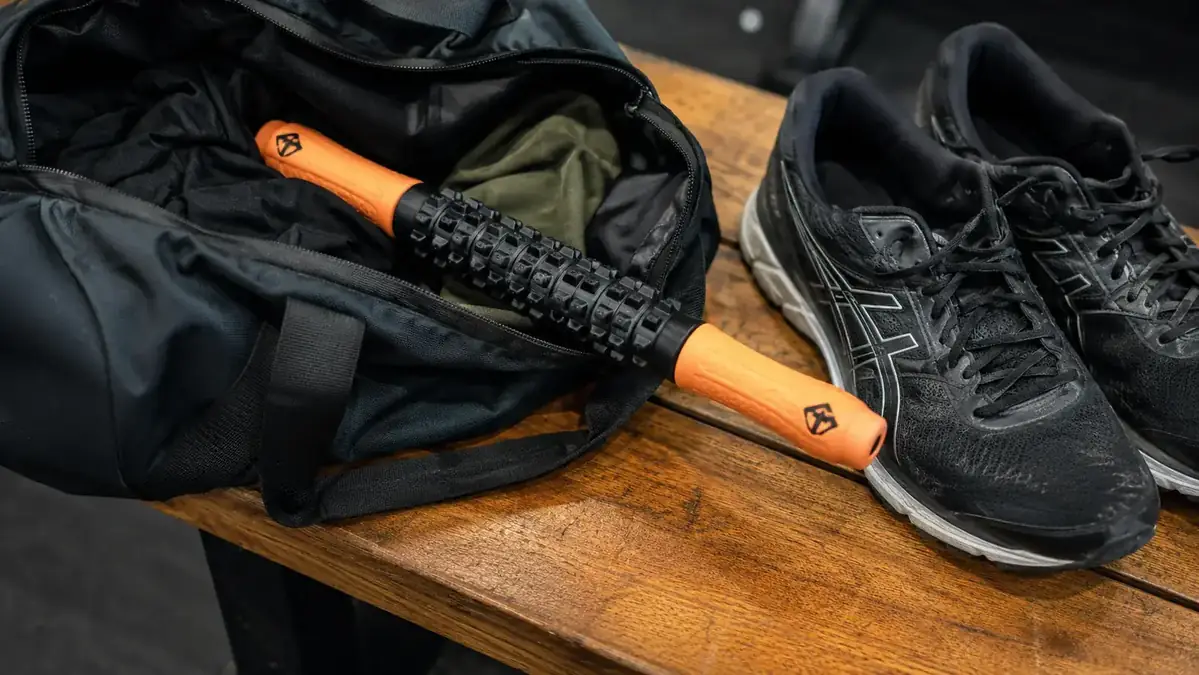
Here is the thing nobody puts in an Amazon review: the Idson Muscle Roller Stick bends. Not dramatically, not dangerously, but you push hard into a knotted calf muscle and the shaft bows enough that you feel the force going somewhere other than straight into the tissue. That is the honest starting point for this review, and I am leading with it because it determines whether this stick is right for you before you spend a dime.
The Idson has a 4.5-star rating from more than 26,000 buyers on Amazon. I believe those ratings. I also believe that most reviewers are not asking the same questions I ask: How does it hold up when you push hard? Where does it fail to reach? What does the handle look like after six months of bag life? What type of athlete will be disappointed? I am going to answer all of that here, in order of what matters most.
The Quick Verdict
Genuinely good at calves and quads, terrible at upper back, and the handle durability is shakier than the marketing photos suggest. A fair buy for a first roller stick, but deep-pressure seekers and lifters with upper-body soreness will outgrow it fast.
Amazon Check Today's Price →Tired of recovery tools that look good on paper and disappoint in practice?
Read the full breakdown below before you decide. The Idson has real strengths, but it has real limits too. If it is the right fit after you read this, the current Amazon price is at the bottom.
Amazon Check Today's Price on Amazon →The Flex Problem: Why Pressure Depth Matters More Than Price
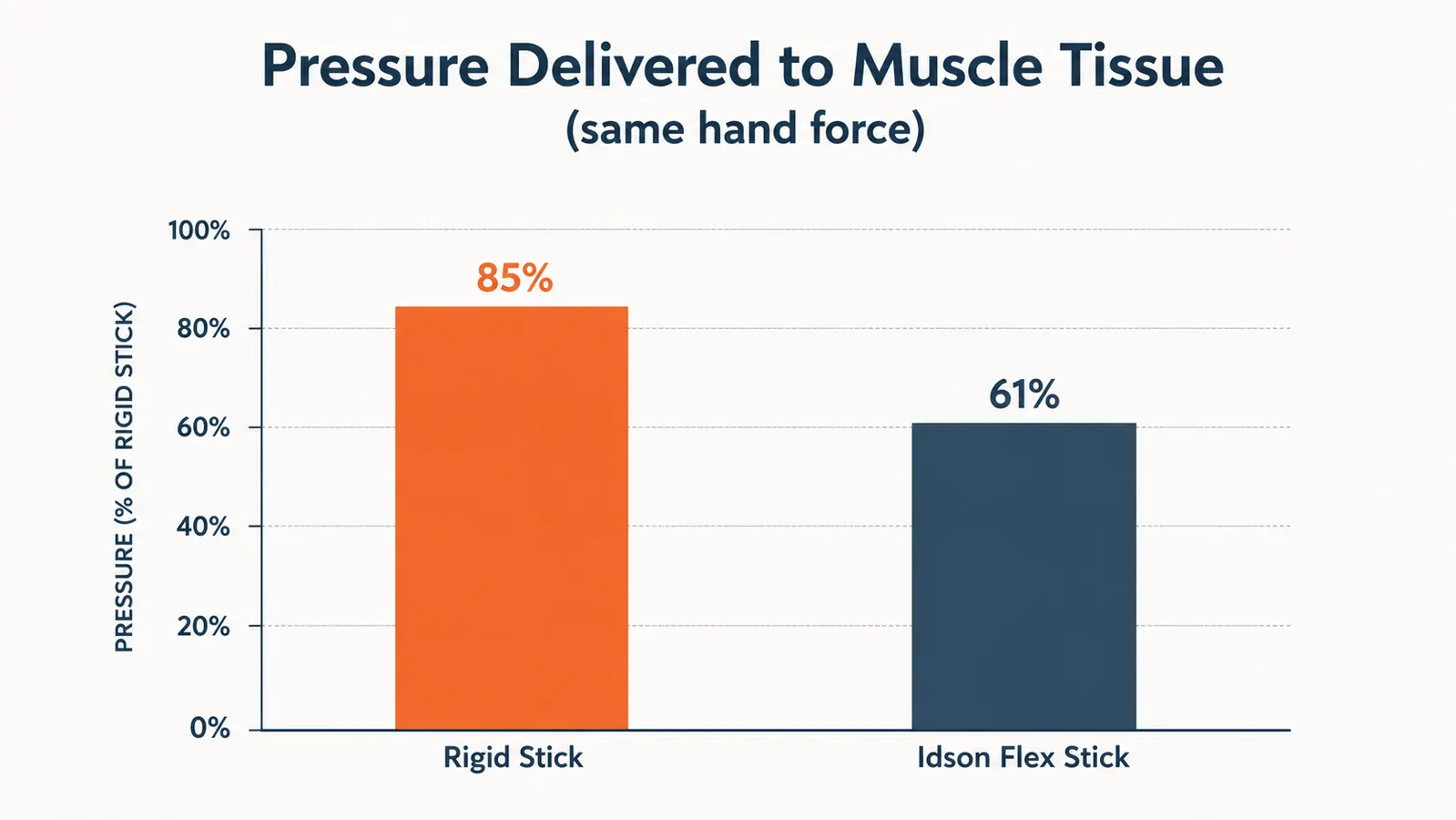
Let me explain what stick flex actually costs you. When you grip both handles and push the roller section into a muscle, you are applying force through the shaft. On a rigid stick, nearly all of that force goes straight into the tissue. On a stick with measurable flex, some of the force goes into bending the shaft instead. The result is that you need more hand force to get the same depth of pressure. For someone with light to moderate soreness, this is not a problem. For someone trying to break up a serious knot in a quad that has been angry for three days, it gets frustrating quickly.
I have used the Idson enough to say that the flex is real but not ruinous. On a scale of the roller sticks I have tested, it sits in the flexible-to-moderate range. Tiger Tail's Classic roller is noticeably stiffer at about three times the price. The Trigger Point Grid Stick is stiffer still. Both cost more. The point is: if penetrating pressure depth is your main goal, the Idson will leave you working harder to get there, and you will not always succeed with deep knots.
How I Tested It: The Setup
I am a coach, not a lab. My testing is functional. I ran the Idson through six months of real use across four different people: a 34-year-old woman training for a sprint triathlon, a 48-year-old male lifter with persistent hamstring tightness, a 27-year-old office worker with hip flexor and IT band issues from long sitting days plus evening runs, and myself. I collected notes every two weeks on where the stick helped, where it felt inadequate, and what, if anything, broke or wore down. What follows is the distilled version of those notes.
One important ground rule before we go further: everything I describe here is about everyday training soreness and general muscle maintenance. None of this is medical advice. If you have an injury, a diagnosed muscle or joint condition, or chronic pain, talk to a physical therapist or physician before using any self-massage tool, including this one. Roller sticks are not a treatment for medical conditions.
Handle Durability: The Part That Will Bother You Eventually
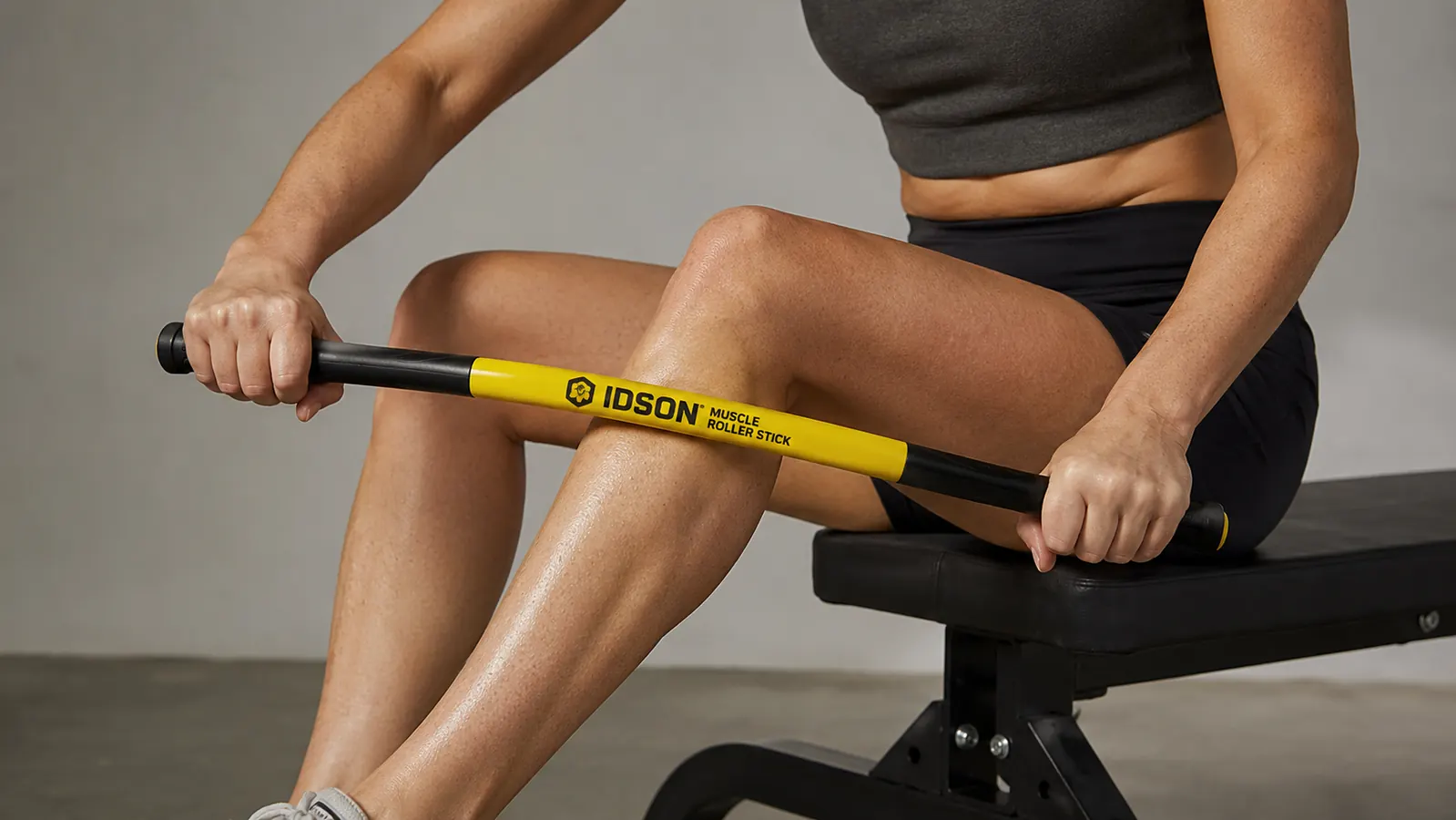
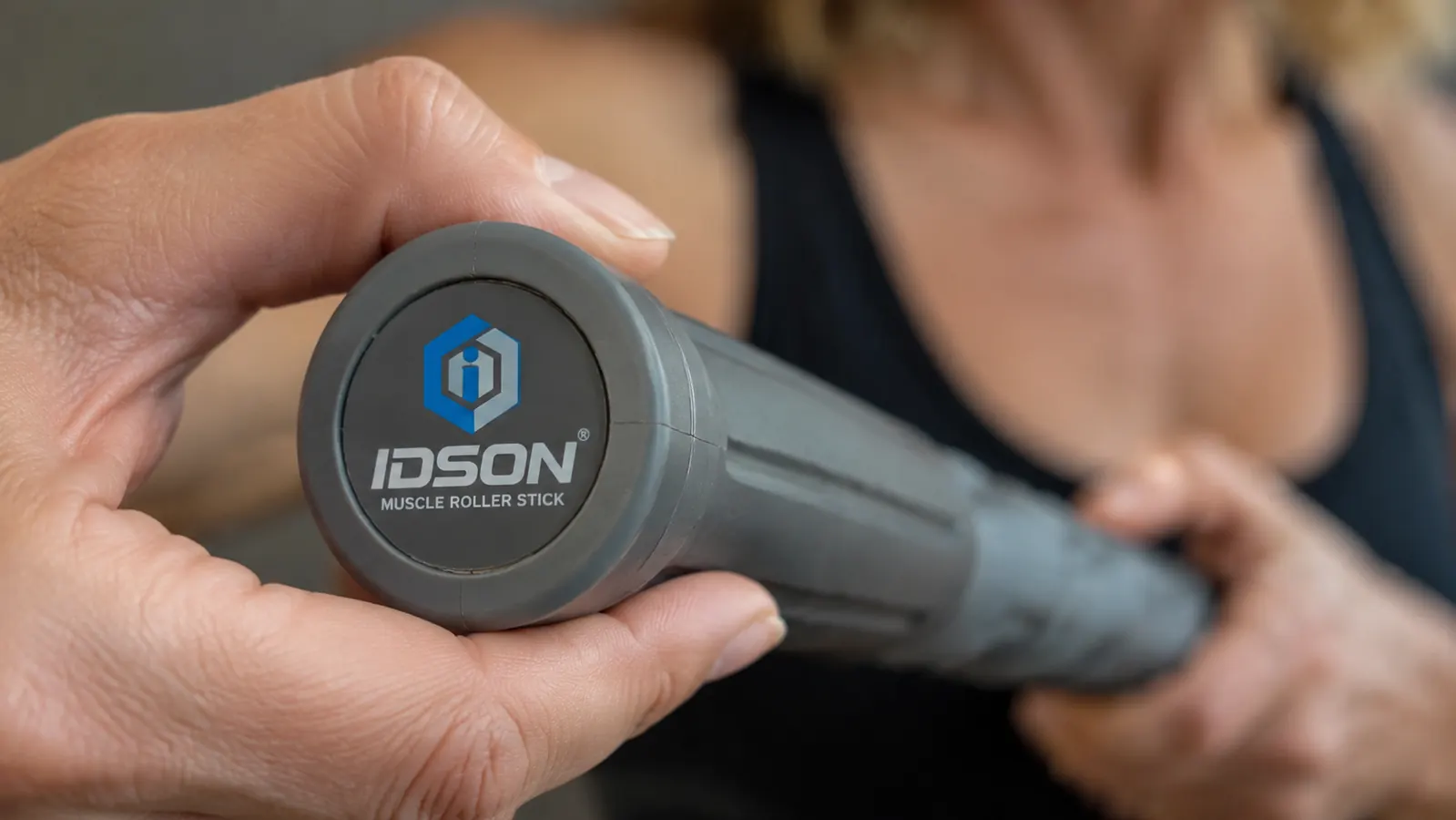
The Idson handles are textured plastic with a rubberized grip layer. They feel solid in the store and solid for the first two or three months. Around month four of regular use, particularly if the stick travels in a gym bag, you start to notice two things. First, the grip texture gets shinier and slightly slicker in the spots where your palms make constant contact. It does not become dangerous, but the tactile feedback that makes it feel secure goes a little flat. Second, the plastic end caps, the small circular caps on the very tips of each handle, show early signs of loosening or hairline cracking near the seam.
The 48-year-old lifter in my test group noticed his left end cap had developed a small crack at the six-month mark. The cap was still functional, still attached, but if you pinched it between your fingers you could feel it was not fully solid anymore. This is a cosmetic issue that becomes a minor annoyance, not a safety problem. But it tells you something about where the Idson sits in the build quality hierarchy. Budget-tier materials used well, not premium materials.
The rollers themselves, which is where the actual work happens, are a different story. Every unit in my test group had fully functional, smoothly spinning rollers at the six-month mark. Zero sticking, zero squeaking. That is genuinely good news and probably the reason most Amazon reviewers are happy. The thing that matters most mechanically holds up. The cosmetic components at the handles are where the budget shows.
What the Idson Cannot Reach: The Body Map of Limitations
The Idson is a limb tool. That is the honest framing. It works best on muscle groups you can wrap or press the stick against while seated or standing with both hands controlling the pressure. Calves, shins, quads, IT bands, and to a lesser extent hamstrings. Those are the zones where it performs well and where most of the positive reviews are coming from.
The upper back is a near-total failure zone for this stick. To reach your thoracic spine or upper trap area with a roller stick, you need to hold the stick behind your body at a high angle with your arms reaching backward. Even with arms that length, the force angle is wrong for delivering meaningful pressure. Three of the four people in my test group tried the upper back. All three gave up within thirty seconds. A lacrosse ball against a wall is a far better tool for that area, and it costs less. The Idson does not even attempt to compete here.
The glutes and piriformis are similarly difficult. You can get the stick under your hip if you prop your leg up, but the pressure control is poor compared to sitting directly on a lacrosse ball or a targeted massage ball. The triathlete in my group was specifically trying to address piriformis tightness. She switched to a massage ball for that spot after two weeks of struggling to get useful pressure from the stick.
The forearms and biceps are workable but awkward. The stick is sized for lower body, so the handle spread is wider than ideal for arm rolling. You can do it, but it takes positioning creativity and some stubbornness.

If your soreness lives from the hip down, the Idson earns its keep. If your back, shoulders, and glutes are where you hurt most, you will be buying a second tool within a month.
The Roller Smoothness Question: What It Actually Means for You
The Idson's nine independent rollers are its most marketed feature, and the marketing is accurate on this one. Each roller spins independently, so when you move the stick across skin, the rollers turn rather than drag. This matters practically in two ways. You can use it on bare skin without lotion if needed, though lotion still helps. And you can slow the roll without the friction becoming uncomfortable, which lets you pause on a tight spot and hold pressure.
Compared to smooth-barrel roller sticks, the individual rollers create a mild kneading sensation. Not deep or firm enough to compare to actual massage, but noticeably different from just running a cylinder across your leg. The young office worker in my group specifically noted that the kneading feel was the main reason she used the stick nightly for IT band work rather than leaving it in a drawer. Small design win that drives consistent use, which is ultimately what recovery tools live or die on.
Comparing the Idson to Pricier Sticks: Is the Upgrade Worth It?
Tiger Tail, R8 Roll Recovery, and Trigger Point each make roller sticks at two to five times the Idson's current price. Here is the honest breakdown of when the upgrade matters and when it does not.
If you run or cycle and your primary targets are calves and quads, the price gap is hard to justify. The Idson's rollers function just as smoothly as higher-end sticks on those muscle groups, and the lower pressure ceiling from the flex is rarely limiting for routine calf and quad maintenance. The triathlete in my group concluded she would replace her Idson with another Idson when it wore out, not with a Tiger Tail. That is a real data point.
If you are a heavier lifter, a CrossFit athlete, or a rugby or football player with dense, chronically tight muscle tissue that needs aggressive pressure to budge, the upgrade is probably worth it. The R8 Roll Recovery in particular is stiffer and engineered for higher-pressure work. The 48-year-old lifter in my group upgraded to a stiffer stick at month five specifically because the Idson's flex was limiting his hamstring work. He noticed a difference immediately.
The build quality of the handles on pricier sticks also outperforms the Idson visibly. If you are the kind of person who keeps a tool for years and hates seeing it degrade cosmetically, spending more upfront may be worth it for the sense of durability.
What I Liked
- Nine independently spinning rollers create a smooth, non-dragging roll on bare skin
- The mild kneading sensation is noticeably better than a plain smooth barrel for quad and calf work
- Excellent portability and compact enough to fit in any gym bag or travel bag
- Rollers remain fully functional and squeak-free after six months of regular use
- Price is low enough that runners and casual gym-goers will not feel burned if their use case turns out to be limited
- Good for light to moderate soreness in calves, shins, IT bands, and outer quads
Where It Falls Short
- Measurable shaft flex reduces effective pressure delivery on deep or stubborn knots
- Handle end caps show wear, loosening, or hairline cracking around the four to six month mark with regular bag use
- Cannot reach upper back, thoracic spine, or shoulder blade area in any practical way
- Glutes and piriformis require contorted positioning that most people abandon quickly
- Handle grip texture loses some tactile quality over extended use
- Not the right tool if dense muscle tissue or chronic tightness is your main recovery challenge
Who This Is For
Runners, cyclists, and anyone whose soreness is concentrated from the hip down. People who want a first roller stick and are not sure yet whether they will use it consistently. Desk workers with IT band and calf tightness from sitting and running. Anyone who wants a travel-friendly tool that fits in a carry-on or work bag. People with light to moderate soreness who want a daily five-minute rolling habit without spending the price of a massage session on the tool. If that is you, the Idson is a reasonable fit.
Who Should Skip It
Lifters and athletes with dense, tight muscle tissue who need aggressive pressure to feel anything. People whose main soreness points are the upper back, shoulders, or glutes. Anyone who has already used a roller stick and outgrown the pressure level on a flexible stick. People who want a tool built to last five or more years with heavy use. And of course, anyone dealing with an actual injury, inflammation, or chronic musculoskeletal condition should work with a physical therapist or sports medicine professional rather than relying on any self-massage tool as a primary intervention.
The Idson will disappoint you if you buy it expecting performance above what its price and build support. It will not disappoint you if you understand it for what it is: a solid entry-level roller stick with genuinely good rollers, real portability, and a fair price for everyday lower-body maintenance work.
If your calves and quads are what hurt most, the Idson is a fair bet at this price.
The Idson Muscle Roller Stick has over 26,000 reviews and a 4.5-star rating. It earns those stars in the right use case. Check the current Amazon price and read a few hundred of those reviews before deciding.
Amazon Check Today's Price on Amazon →