Here is the honest truth about post-workout stretching: most people either skip it completely or run through a thirty-second quad pull and call it a day. I get it. You just trained hard, you are tired, and you want to go home. But that skipped cooldown is exactly why you are stiff and slow the next morning when your alarm goes off. I have been coaching recovery for over a decade, and the single biggest difference I see between athletes who stay consistent and athletes who flame out is what they do in the fifteen minutes after they finish their last set or their last mile.
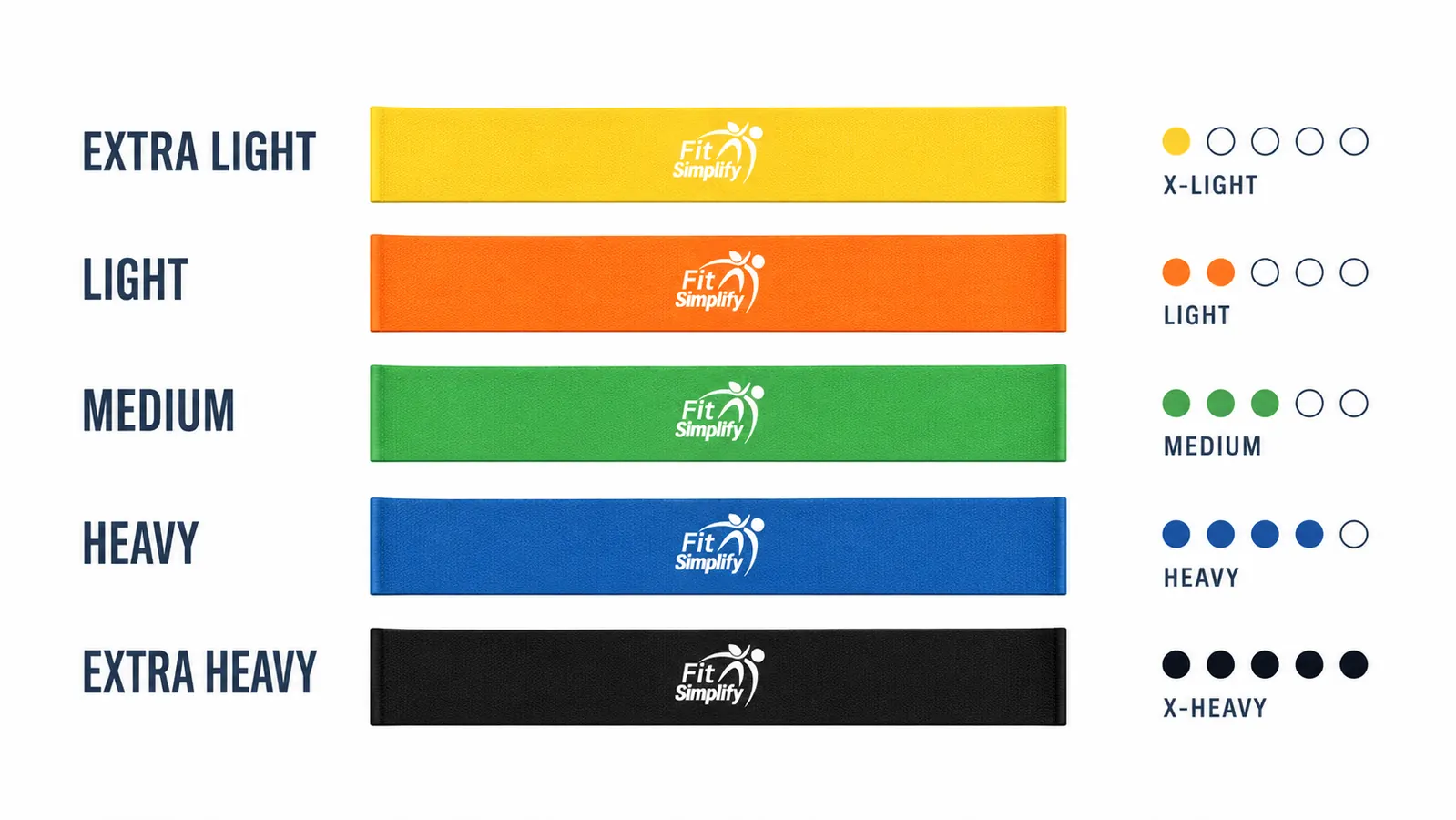
Resistance bands change the stretching equation because they let you apply gentle, consistent traction to a joint or muscle group without needing a partner or a foam roller the size of a log. The Fit Simplify Resistance Loop Bands come in five tension levels, which means you can match the band to the muscle and the mood, going lighter on exhausted legs after a long run, heavier on hips that have been locked up all day at a desk. These ten stretches cover the muscle groups that get hit hardest in most training sessions. Run through all ten and you are looking at twelve to fifteen minutes of actual recovery work that will show up as reduced soreness by the next morning.
If your cooldown is costing you the next workout, a resistance band set fixes that for under ten dollars.
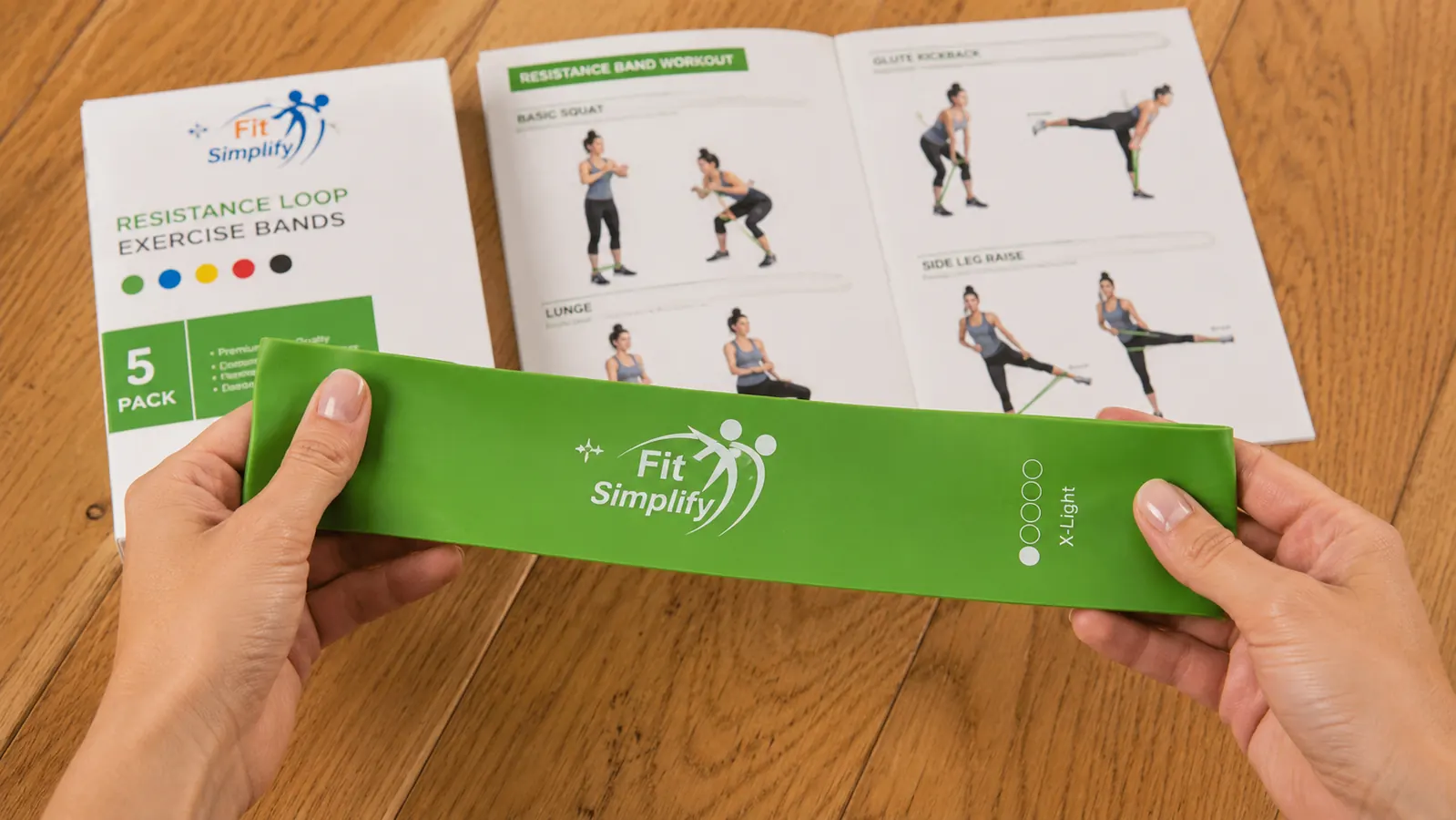
The Fit Simplify set includes five tension levels, a carry bag, and an instruction guide. It is the band set I recommend to every client who trains more than three days a week.
Amazon Check Today's Price on Amazon →Standing Hip Flexor Stretch with Band Anchor
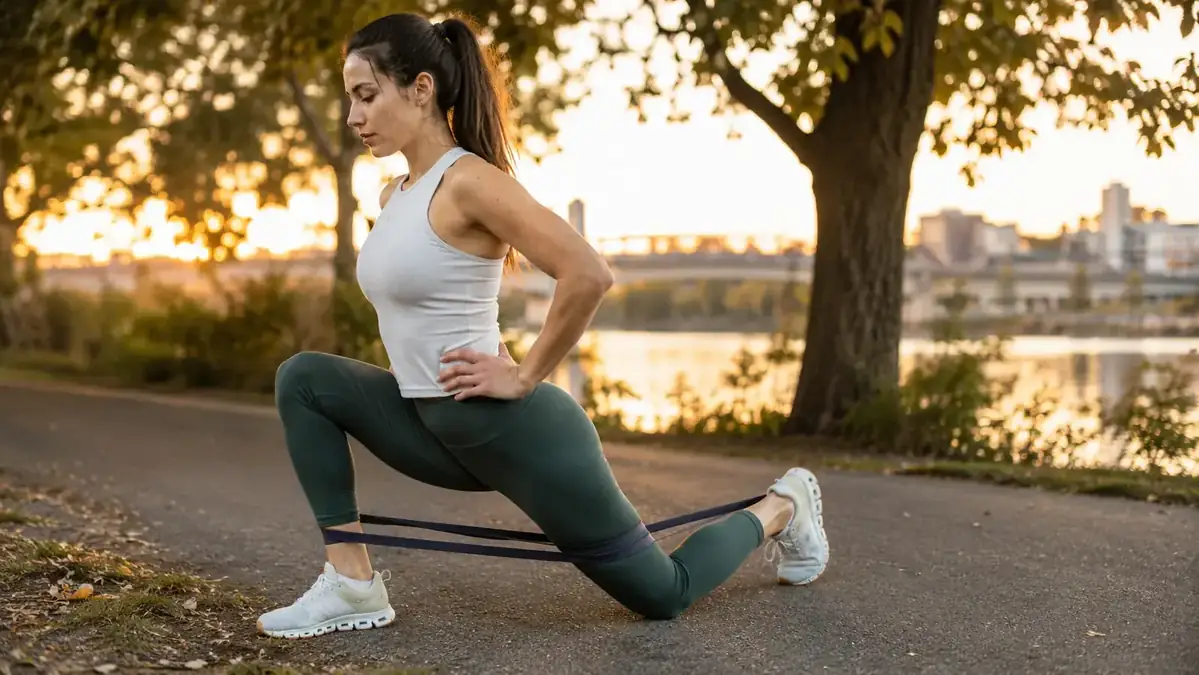
Loop a medium-resistance band around something fixed at ankle height, step one foot forward into the band so it sits across your back ankle, and sink into a lunge while keeping your torso upright. The band adds a forward pull that deepens the hip flexor stretch without you having to fight your own balance. Hold thirty seconds per side. If you sit for most of the day, your hip flexors are almost certainly the most compressed muscle group you own, and this stretch is the fastest way to undo that compression after any lower-body session.
Supine Hamstring Pull
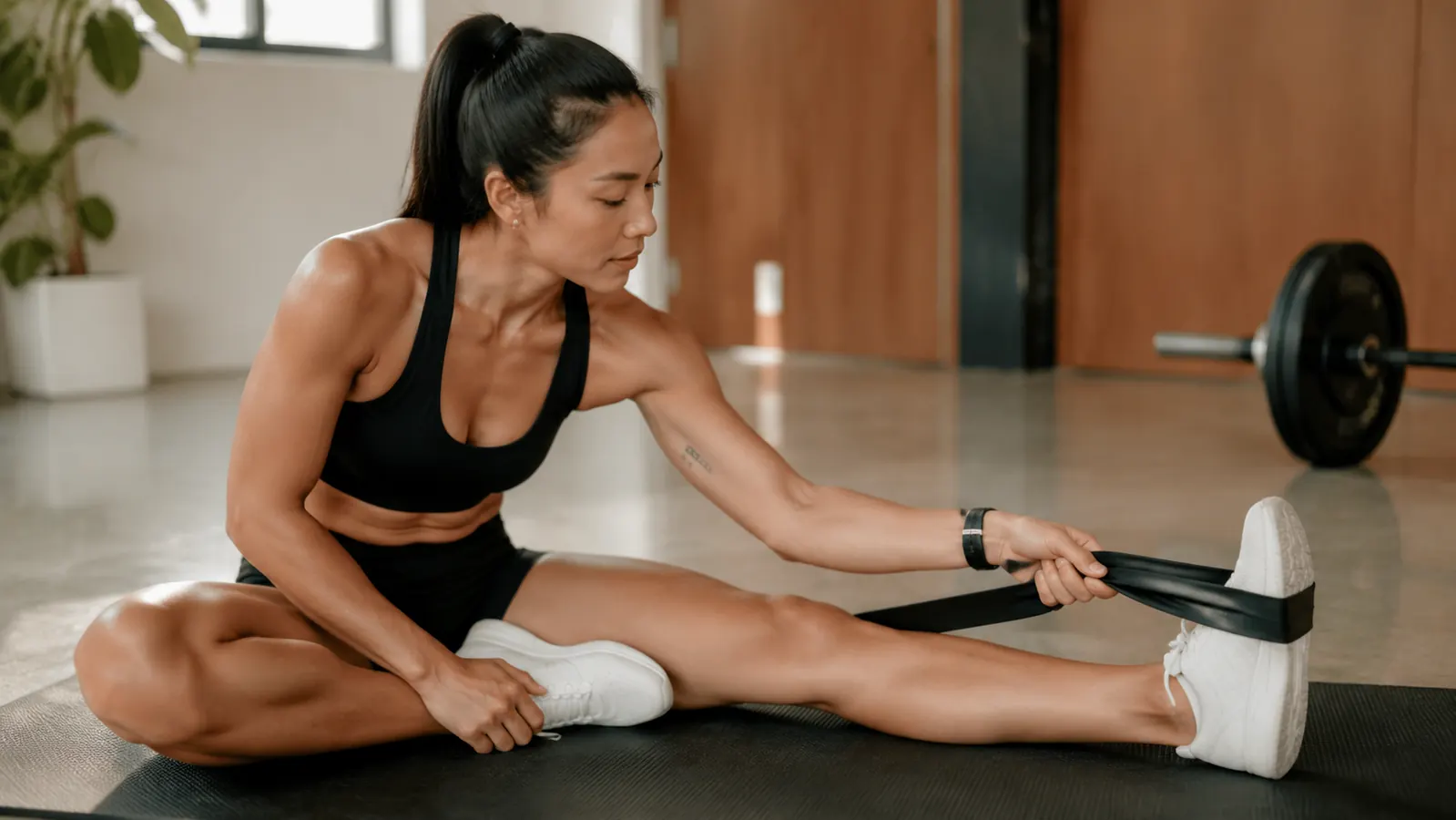
Lie flat on your back, loop a light-resistance band around the arch of one foot, and slowly extend that leg toward the ceiling while holding the band ends with both hands. You control the depth by how much you pull the band. This is safer on tired hamstrings than a standing forward fold because gravity is not working against you, and the band gives you a grip point that lets you ease into the stretch one centimeter at a time. Hold forty-five seconds per leg. After any squat or deadlift session, your hamstrings need this.
Lateral Hip and Glute Figure-Four Stretch
Lie on your back with knees bent and feet flat. Cross your right ankle over your left knee. Loop a light band around your right foot and hold the ends, then gently use the band to pull your left knee toward your chest. The crossed position puts your glute medius and piriformis right in the target zone. Runners and cyclists who get tight IT bands will feel this one immediately. Hold thirty seconds per side. If you have had knee discomfort on the outside of the joint, releasing the glute medius before your next session can noticeably reduce that feeling.
Seated Thoracic Rotation Assist
Sit cross-legged on the floor and anchor a light band to a door handle or post at shoulder height beside you. Hold the band in both hands and slowly rotate your torso away from the anchor point, letting the band provide gentle resistance as you rotate back. This is not about yanking yourself into a twist. It is about giving your thoracic spine something to work against so the rotation is active, not passive. Upper-body training days compress the thoracic spine, and five repetitions of ten-second holds per side can restore a surprising amount of mobility before the next session.
Shoulder Overhead Stretch with Band Tension
Hold a medium band in both hands with a grip slightly wider than shoulder-width. Raise your arms overhead and let the band create a controlled distraction as you gently lower both arms behind your head. The band keeps your hands from pulling too far and gives your shoulder capsule a steady, consistent stretch instead of a sudden one. Keep your ribs down and your core lightly engaged. This is the stretch I give every client who trains bench press, overhead press, or pull-ups. Hold the end position for thirty seconds and move back through it three times.
The difference between being sore for a day and sore for three days often comes down to what you do in the first thirty minutes after you finish training. Bands make that window easier to actually use.
Prone Quad Stretch with Band Assist
Lie face-down on your mat and loop a light band around one ankle. Reach back and hold the band with the same-side hand, then gently pull your heel toward your glute, using the band to assist if your quad is too tight to reach your foot. The band removes the shoulder and elbow strain that often interrupts a classic prone quad stretch. Hold forty-five seconds per leg. After any heavy leg day, quad flexibility drops significantly, and this stretch is one of the few that works the quad under a mild load, which helps reduce the next-day stiffness.
Calf and Achilles Traction Stretch
Sit with both legs extended. Loop a light band around the ball of one foot and hold the ends. Pull the band gently so your toes come toward your shin and hold, then slowly let off and move through the full calf range five to eight times before settling into a held stretch for thirty seconds. This is especially important for runners, anyone who does box jumps or calf raises, and anyone whose Achilles tendon feels tight in the morning. The band lets you control the depth exactly, which matters when the calf is genuinely fatigued and prone to cramping if stretched too aggressively.
Side-Lying Hip Abductor Stretch
Lie on your side with your bottom knee bent for stability and your top leg straight. Loop a medium band around both ankles and let the band provide resistance as you lower your top leg toward the floor in front of you, then bring it back up and behind you. This is more of an active recovery move than a static stretch, but it is one of the best ways to flush out the outer hip after a heavy training day. Three sets of ten slow repetitions per side. The glute medius and TFL (the muscle that contributes to IT band tightness) respond well to light resisted movement in the twenty minutes after training.
Doorway Chest Opener with Band Assist
Stand in a doorway and hold a light band behind your back, gripping it with both hands at hip width. Step one foot forward and gently pull the band outward and up as you open your chest toward the ceiling. The band creates a light challenge for the rear shoulder and mid-back muscles while your pec minor and anterior shoulder capsule get the stretch they need after any pressing or rowing work. Hold thirty seconds, relax, repeat three times. If you train your upper body more than twice a week, this stretch will pay off in how well your shoulders sit in the next session.
Child's Pose with Band-Resisted Lat Pull
Anchor a light band at low height. Get into child's pose on your mat and hold the band in both hands with your arms extended in front of you. Let the band pull your arms gently forward as you sit your hips back toward your heels. The lat stretch you get here is far deeper than a standard child's pose because the band creates a long-axis traction through the whole side of your torso. Hold sixty seconds. This is the stretch I end every session with. Your lats connect your upper arm to your lower back, and when they are tight, your squat depth suffers, your shoulder rotation suffers, and your lower back picks up extra load. Sixty seconds here clears a lot of that.
What I Would Skip
If you go heavier than you need to on any of these stretches, you are working against yourself. Recovery stretching is not the place to push through discomfort. The goal is to move blood into fatigued tissue, restore the range of motion you had before training, and give your nervous system a signal that the work is done. If a band is creating any sharp or pinching sensation, drop to a lighter level immediately. The Fit Simplify set starts with an extra-light band for a reason: it is plenty of resistance for post-workout flexibility work on most muscle groups. Save the heavier bands for activation work before training.
Recovery stretching is not the time to prove anything. You are not trying to become more flexible right now. You are trying to show up to your next session feeling like a person.
Your cooldown is either building your next workout or borrowing from it. The bands make the right choice easier.
The Fit Simplify Resistance Loop Bands come in a set of five with a carry bag and instruction guide. They weigh almost nothing, fit in a gym bag pocket, and cover every stretch in this list. At this price point, there is no reason to be stretching without them.
Amazon Check Today's Price on Amazon →